Pioneering science and engineering, international cooperation and climate diplomacy are key to managing the climate crisis, says a Cambridge expert.
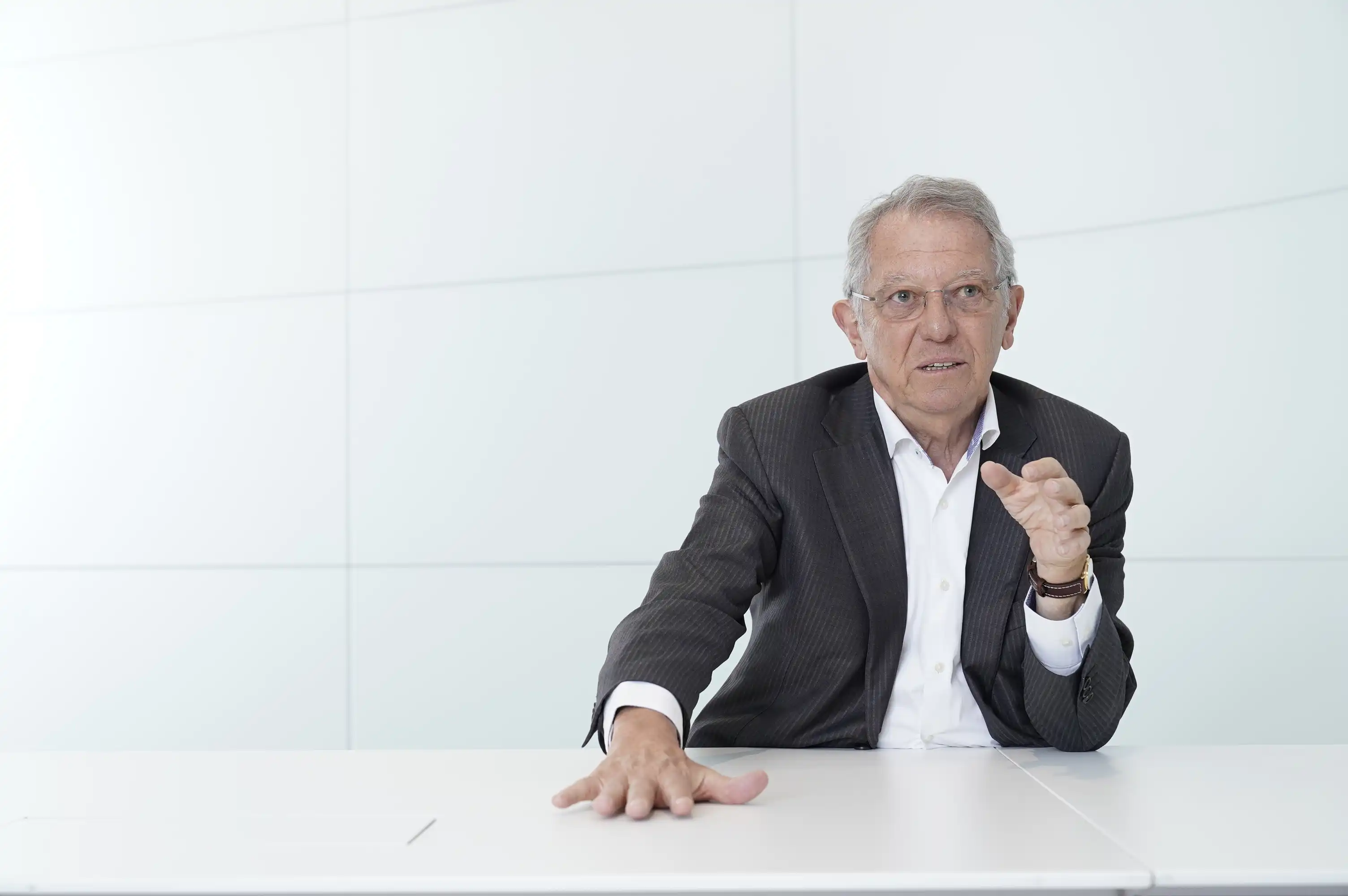
Professor Sir David King FRS, an Emeritus Professor of Physical Chemistry at the University of Cambridge, Founder and Chair of the Climate Crisis Advisory Group, and Honorary Fellow of St John’s, will give the College Climate Crisis Lecture, titled The climate crisis: a manageable way forward for humanity.
In the lecture, he will review the science of climate change and explain the current global state of our shifting climate, which he calls ‘a very real threat to our future’.
Sir David, who is also Founder of the Centre for Climate Repair at Cambridge, will propose a practical strategic pathway with four elements: rapid emissions reduction, excess greenhouse gas removal, Earth system stabilisation, and resilience appropriate to every region of the world.
“The climate crisis is humanity’s greatest challenge, and is still within our capacity to address,” said Sir David. “Innovative science and engineering are essential to confront the risks now emerging. International cooperation, effective climate diplomacy, and a re-examination of the social and economic causes behind our current inability to manage impending disaster, will all be essential to success.”
Sir David was a Fellow of St John’s from 1988-95 and was made an Honorary Fellow in 2022. He served as the UK government’s Chief Scientific Adviser from 2000 to 2007 and as the Foreign Secretary’s Special Representative for Climate Change from 2013 to 2017.
During this time, he travelled extensively to promote international action on climate change and developed an in-depth risk-based approach to climate policy, working particularly closely with the governments of China and India.
“The climate crisis is humanity’s greatest challenge, and is still within our capacity to address”
He also played a leading role in Mission Innovation, a collaboration involving 25 countries and the EU to accelerate publicly funded research and development in clean energy technologies.
Sir David’s lecture is the third in a series organised by the College’s Climate Crisis Committee. Following the lecture, Sir David will take part in an audience Q&A alongside a panel of St John’s experts.
These will include Fellows Professor Ed Tipper, Professor and Director of Teaching in the Department of Earth Sciences, College Lecturer and Director of Studies in Earth Sciences, and Chair of the Climate Crisis Committee, and Professor Jane Heal, Emeritus Professor of Philosophy.
They will be joined by PhD students Niels Kunz (Industrial Decarbonisation and Industrial Policy) and Henning Zschietzschmann (Economics), and the MC will be Professor Simon Szreter, Professor of History and Public Policy and Fellow of St John’s, who is Secretary of the Climate Crisis Committee.
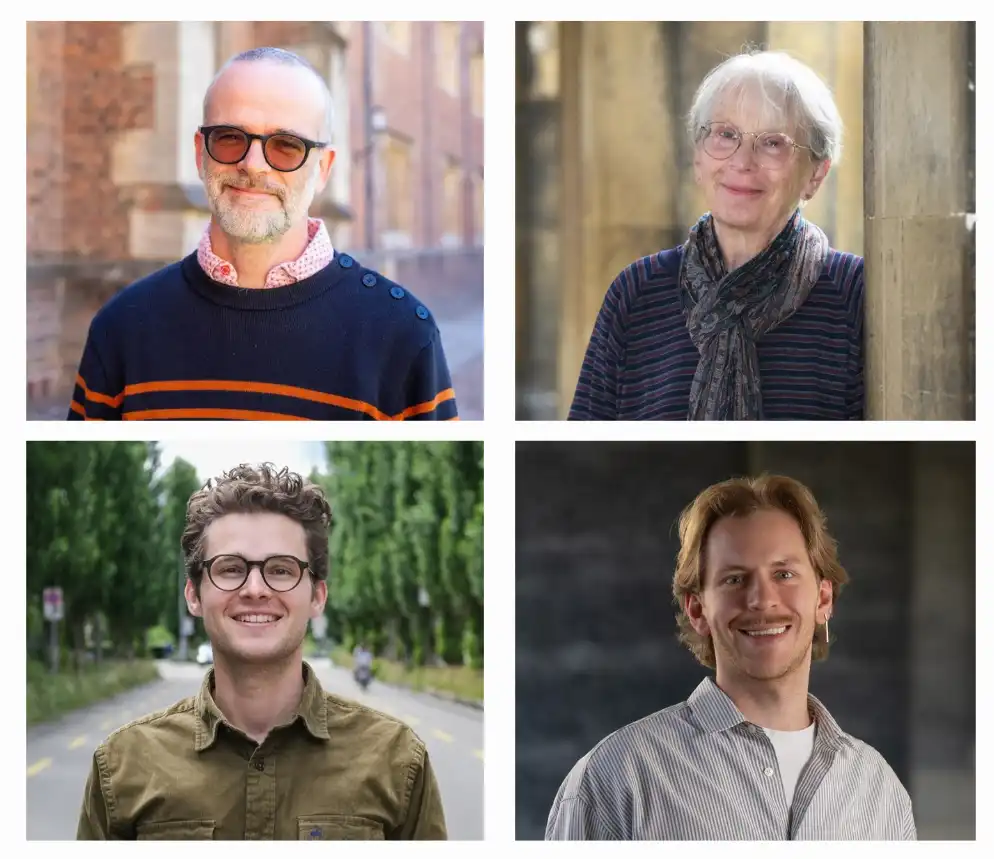
Panellist Niels is one of three St John’s students invited to share their research related to the climate crisis before the lecture. He will give a talk titled Stranded no longer? Assessing iron-fuel retrofits for coal power plants. Attendees can also hear from recipients of the 2026 Mace-Arnold Studentships, which fund climate research summer projects for St John’s undergraduates. Design student Ayesha Awais will give a brief presentation on Exploring material reuse across St John’s College construction projects, and Engineering undergraduate Luke Wiggins will discuss his research, titled Green roofs for St John’s College: A feasibility study.
As Chief Scientific Adviser, Sir David helped raise climate change as a major issue for government and played a key role in the creation of the £1 billion Energy Technologies Institute. He has advised governments, the United Nations and international institutions on climate risk, mitigation and responses to global environmental challenges.
The Climate Crisis Lecture will take place in the Main Lecture Theatre, Old Divinity School, St John’s College at 5pm on Monday 26 October 2026. The student research presentations will run from 4-4.45pm,and the post-lecture Q&A will be followed by a drinks reception in the Central Hall.
The lecture is free and open to all but advance registration is required.
Niels Kunz is a PhD student researching industrial transformation and comparative decarbonisation pathways across industrial production and energy systems. His work spans renewable hydrogen, iron as a metal fuel, and carbon dioxide removal. With research partners across Germany, China, and the United States, he currently assesses the techno-economic feasibility of retrofitting coal-fired power plants for iron-fuel combustion. He is a member of Cambridge’s Energy Policy Research Group (EPRG) and a research fellow at TU Darmstadt, working with the Metal Energy Hub. He also co-founded a carbon dioxide removal company.
In his pre-lecture talk, Niels will discuss repurposing existing coal plants that generate electricity to burn iron powder instead – making it a recyclable, storable energy carrier.
Henning Zschietzschmann’s PhD research covers extreme weather attribution and impacts, carbon markets, and data centre infrastructure. At Cambridge, he has represented the University at COP, is a member of the EPRG and the Centre for Space, Earth and Energy, and hosts an empirical climate economics seminar series. Previously, he worked as a sustainability strategy consultant for hard-to-abate industries and carbon markets.
Ayesha Awais’s Design project, Exploring material reuse across St John’s College construction projects, explores how reusable building materials could be identified, recorded and circulated across construction schemes, using St John’s College as the main case study.
Luke Wiggins’s Engineering project, Green roofs for St John's College: A feasibility study, investigates the possibility of green roofs in St John’s as well as the benefits and engineering challenges.