Cambridge academics are among those to receive millions of pounds in grants from the Advanced Research + Invention Agency (ARIA) to find ways to use proteins as manufacturing tools, and to reprogramme mitochondria to fight disease.
The engineering tools would be used to assemble advanced materials for future technologies, including high-performance magnets that do not require costly rare-earth elements, while a new medical research programme could revolutionise how we treat many genetic and age-related disorders.
Three Fellows from St John’s College – Professors Michael De Volder, Tuomas Knowles, and Erwin Reisner – are among scientists to share £50 million in funding from ARIA’s three-year Universal Fabricators Programme. Eleven different research teams are investigating ways for proteins to act as a ‘universal fabricator’.
A fourth Fellow, Dr Jeanne Salje, is leading one of 19 programmes backed by ARIA’s £66 million Precision Mitochondria programme, which aims to create a foundational toolkit for engineering the mitochondrial genome in living beings.
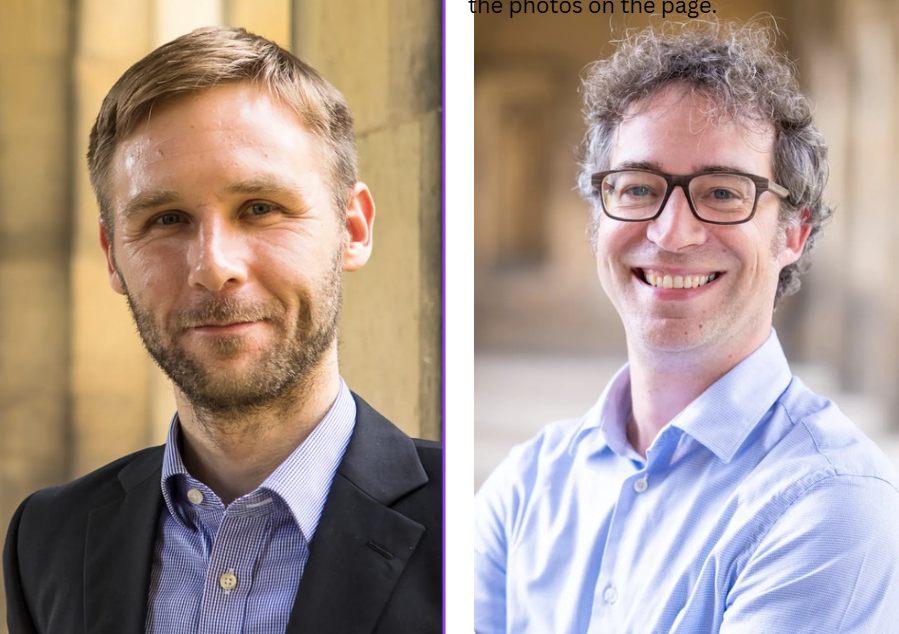
Professors De Volder, Professor of Advanced Materials Engineering and College Lecturer and Director of Studies in Engineering, and Professor Knowles, 1920 Chair of Physical Chemistry and College Lecturer in Nanoscience, both work on the ‘Protein SPARK’ project. It will see proteins used like tiny Lego bricks to grow magnets without rare-earth elements and advanced electrodes for batteries that hold more charge and last longer.
The team’s ‘Droplet Lego’ method takes its inspiration fromthe way proteins direct biomineralisation – the process by which livingorganisms build hard materials like bones and teeth – and runs it on acontinuous production line.
Microscopic droplets carrying the designed proteins andelements will be sprayed and printed into position, much like inkjet printing. The proteins grow, guide and shape the constituent material into nanocrystals, films and three-dimensional structures, giving the team control over both the shape and the function as the material forms.
Professor Ronan Daly, from Cambridge’s Institute forManufacturing, who leads Protein SPARK, said: “Magnets are all around us, from headphones and mobile phones to motors and wind turbines. Almost all magnets include rare-earth materials, which are costly to extract, are a diminishing resource and lead to significant environmental challenges.
“Our project, which is at its heart a manufacturing project, will instead use proteins to drive growth of useful magnetic materials without using rare earth materials anywhere. We will then look at how to apply this toother products, like new batteries that charge quickly and last longer.”
The team is working with researchers from the University of Amsterdam and University of Liverpool.
Professor Knowles is also part of the Protein Organised Engineered Materials (POEM) project. This team is developing a new way to make high-performance magnets by using specially designed proteins to control how magnetic crystals grow and arrange themselves. This approach could produce more powerful and reliable magnets for future technologies by giving scientists precise control over the crystals’ size, shape and spacing.
“Using proteins as templates to assemble inorganic materials could open up new processes for making a next generation of rare-earth-free magnets,” said Dr Shijing Sun, from Cambridge’s Department of Materials Science and Metallurgy. “Our team in Cambridge brings high-throughput methods to that search, so that protein design, materials chemistry and automated experimentation work together as one.”
The project is being led by the University of Washington and also involves the University of Leeds.
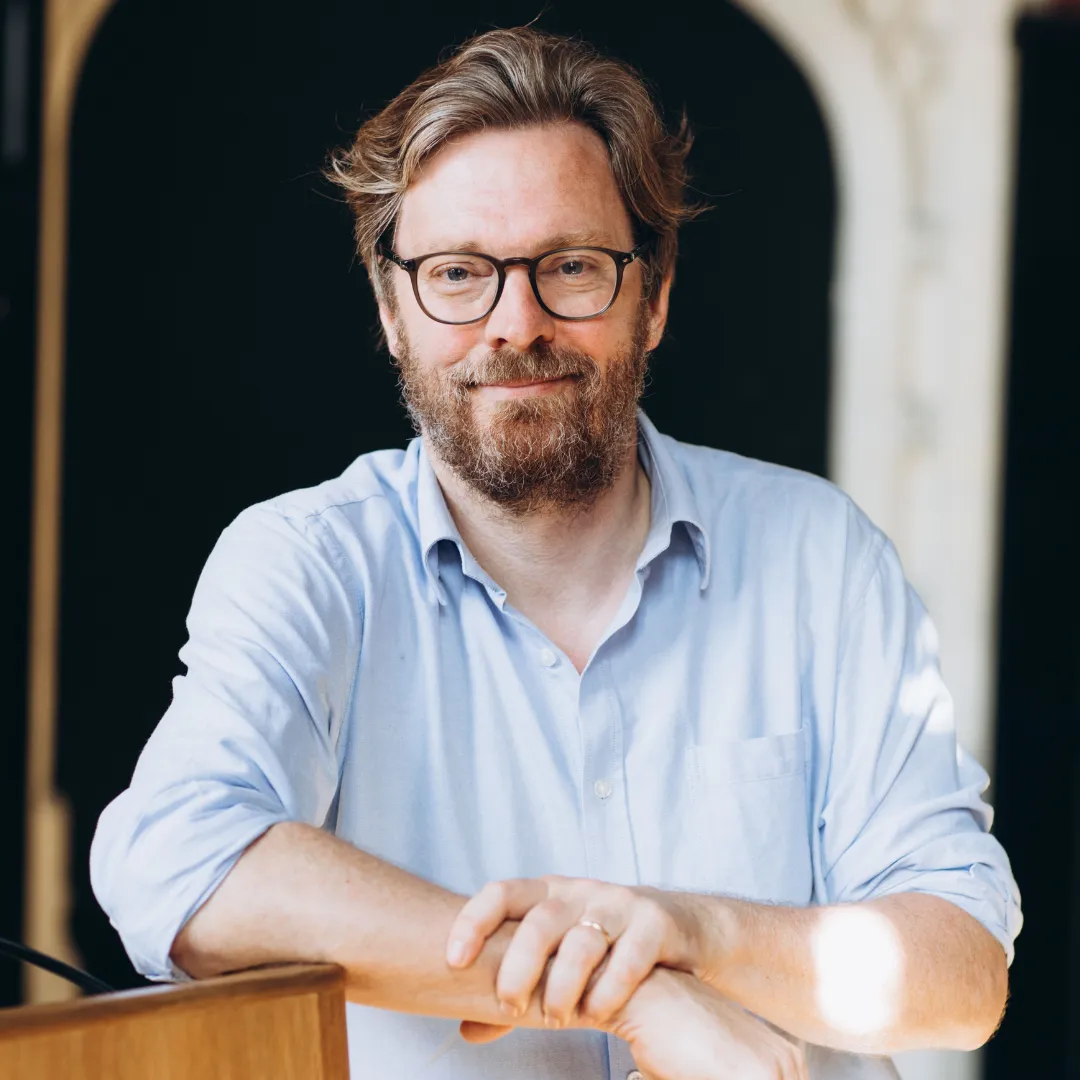
Professor Reisner, Professor of Energy and Sustainability,and Royal Academy of Engineering Chair in Emerging Technologies, is part of the S-LATTICE project team, led by the University of Edinburgh. It is developing new materials by combining naturally self-assembling proteins with metals, creating large, highly ordered sheets that can be customised with properties not found in nature.
These materials could be used for precise filtration, converting carbon dioxide into useful products, cleaner catalysis, and technologies that interact with light, all within a single platform.

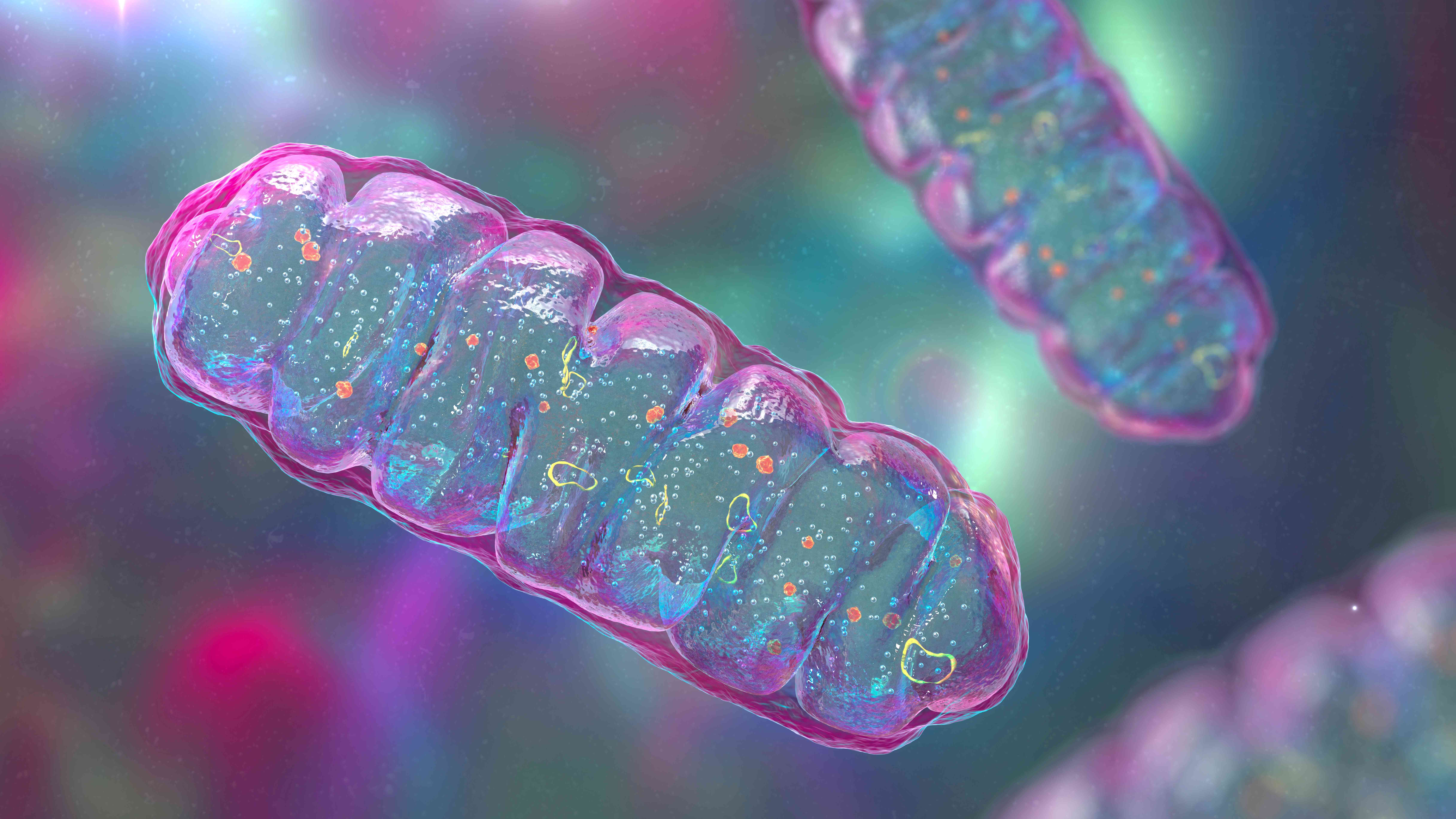
Dr Salje, Assistant Professor in the Department of Biochemistry and Department of Pathology, and the Cambridge Institute forMedical Research, will test whether bacteria that live inside cells can transfer DNA to mitochondria – double membrane-bound cell organelles known as the powerhouses of the cell.
Mitochondria are central to complex life, and their dysfunction is a major contributor to many diseases and the ageing process, yet research is rudimentary.
Her team is focusing on bacteria called the Rickettsiales, close evolutionary cousins of the ancient microbe thought to have become the mitochondrion.
With her group, Dr Salje, School of Biological Sciences Theme Leader in Infection and Immunity, and College Lecturer and Director of Studies in Cell Biology at St John’s, will engineer two related bacteria, Rickettsia and Orientia, with bacterial DNA-transfer systems: RP4, a workhorse of bacterial engineering, and Vir, routinely used to modify plant cells. Running both in parallel improves the odds that one gets DNA across the mitochondrial membranes.
They will use Caulobacter crescentus, a safe and easily handled relative, to demonstrate the pivotal step of transferring DNA directly into isolated mitochondria, and will fit the mitochondria in cultured mammalian model cells with the components needed to receive it. If it works, it would open routes for new therapies for many genetic and age-related diseases.