St John’s Research Fellows competition 2027 launches for early-career academics

Rare opportunity for up to four outstanding junior researchers to pursue independent post-doctoral work as part of St John's College, Cambridge’s welcoming interdisciplinary community
Credit: Nordin Ćatić

Our Research Fellows at St John’s College help to make a better world.

From a Bletchley Park code-breaker to Nobel Prize-winners and the inventor of the phrase ‘Big Bang’, our early-career academics have made groundbreaking contributions to the fields of science, technology, arts and humanities.

Now applications are invited for our prestigious Research Fellowship awards, which will enable rising stars of academia to dedicate themselves to independent research in a supportive and stimulating academic environment for up to four years from 1 October 2027.

Up to four Research Fellowships will be awarded in this year’s competition, which launches today (Wednesday 29 July 2026). Applicants should have submitted their PhD after 1 October 2025 or be on track to have submitted their PhD by 1 October 2027. The starting award for successful researchers is £34,800 plus housing and other benefits, and up to £10,000 in grants over four years.

Heather Hancock, Master of St John’s, said: “St John’s is a brilliant place to progress a research career, you'll be immersed in an interdisciplinary community whose interests range from discovering new cancer treatments, and advancing quantum computing, to evidencing the impact of social media on children’s mental health.

“These prestigious awards offer a rare opportunity to devote yourself to independent research in a stimulating and supportive academic environment.

"We place great importance on the intellectual contribution our Research Fellows make to St John’s, and on creating the conditions for them to accelerate their progress towards outstanding academic careers.”

Current Research Fellows highlight the exceptional opportunity to devote meaningful time to their research, supported by a comprehensive package that includes generous practical support, an intellectually rich and socially engaging College community, and full participation in academic life at St John’s.

“Our Research Fellows organise lecture series, connect with alumni and students, help to foster an active social life, are integral to sport, music and other cultural activities, and sit on appointment panels,” added The Master.

“They are able to be devoted to research while taking advantage of opportunities to gain experience in strategic and business matters, which can be genuine differentiators when it comes to future steps on the career ladder.”

Our Research Fellows benefit from up to £10,000 in additional grants over their four-year tenure. These grants support the costs of academic materials, travel expenses, computer equipment, books and costs relating to organising a conference or workshop in St John’s.

The St John’s College Research Fellowship Competition 2027 is open for submissions until 2pm BST on 17 September 2026.
APPLY NOW

Credit: Nordin Ćatić

Meet some of our groundbreaking junior researchers

Research Fellows at St John’s College are at the cutting-edge of their academic fields and use their career-defining work to grow knowledge and help to create a better world.

They include:

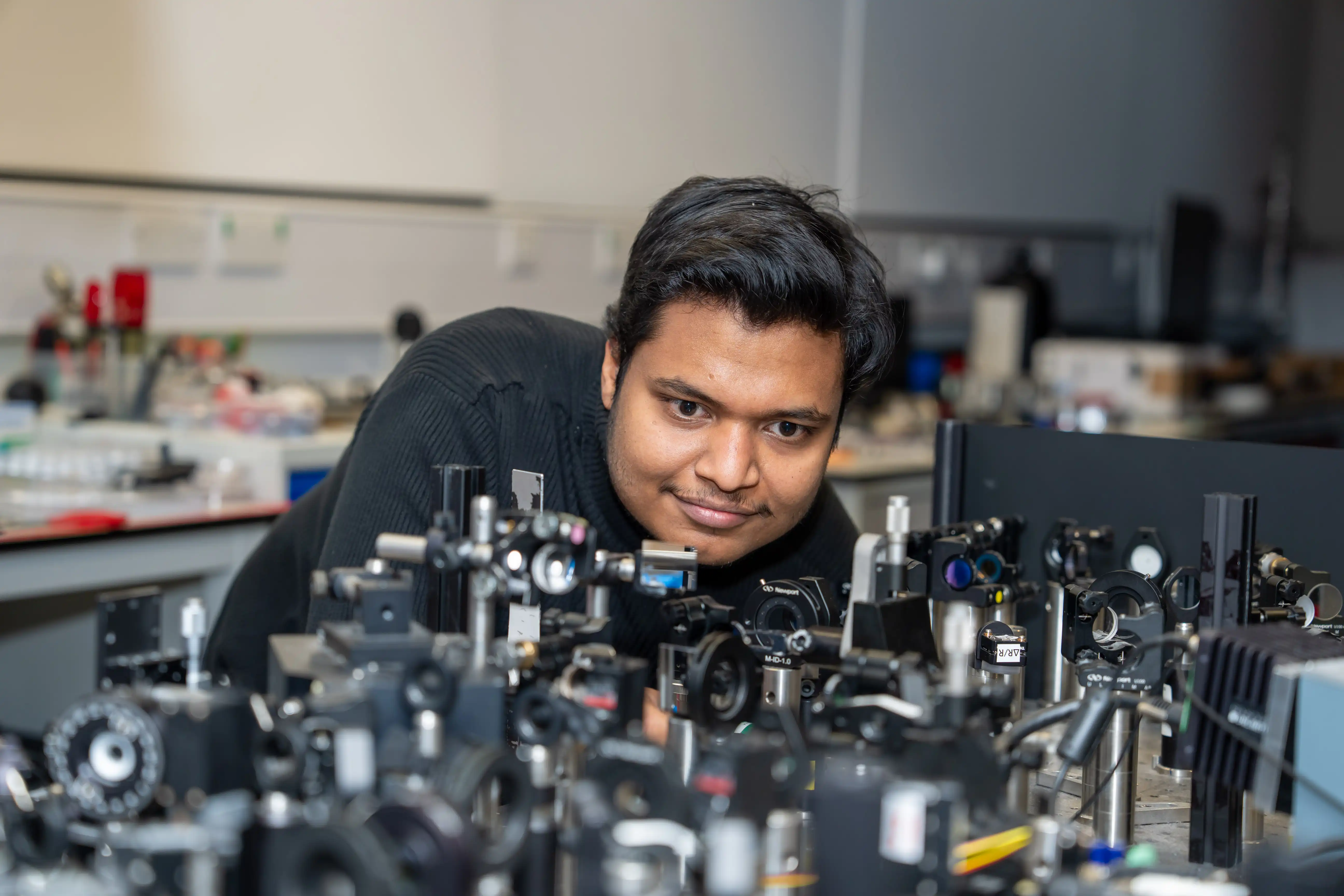
  • Physicist Dr Rakesh Arul who has co-developed a light-emitting system that could eventually improve cancer imaging, smartphone screens and low-energy computing, and has been awarded a £500,000 grant to lead a UK-US project to discover new phenomena at the interface of quantum science and chemistry
  • Dr Holli Sargeant, whose research explores the intersection of law and artificial intelligence. In a new report for the Nuffield Foundation she warns that AI is being adopted at speed across the UK justice system with limited evidence it improves people’s experiences, outcomes or access to justice
  • Dr Andrea Luppi, who is among 25 researchers worldwide to be named a ‘rising star in neuroscience’ by The Transmitter – a US-based publication for the neuroscience community
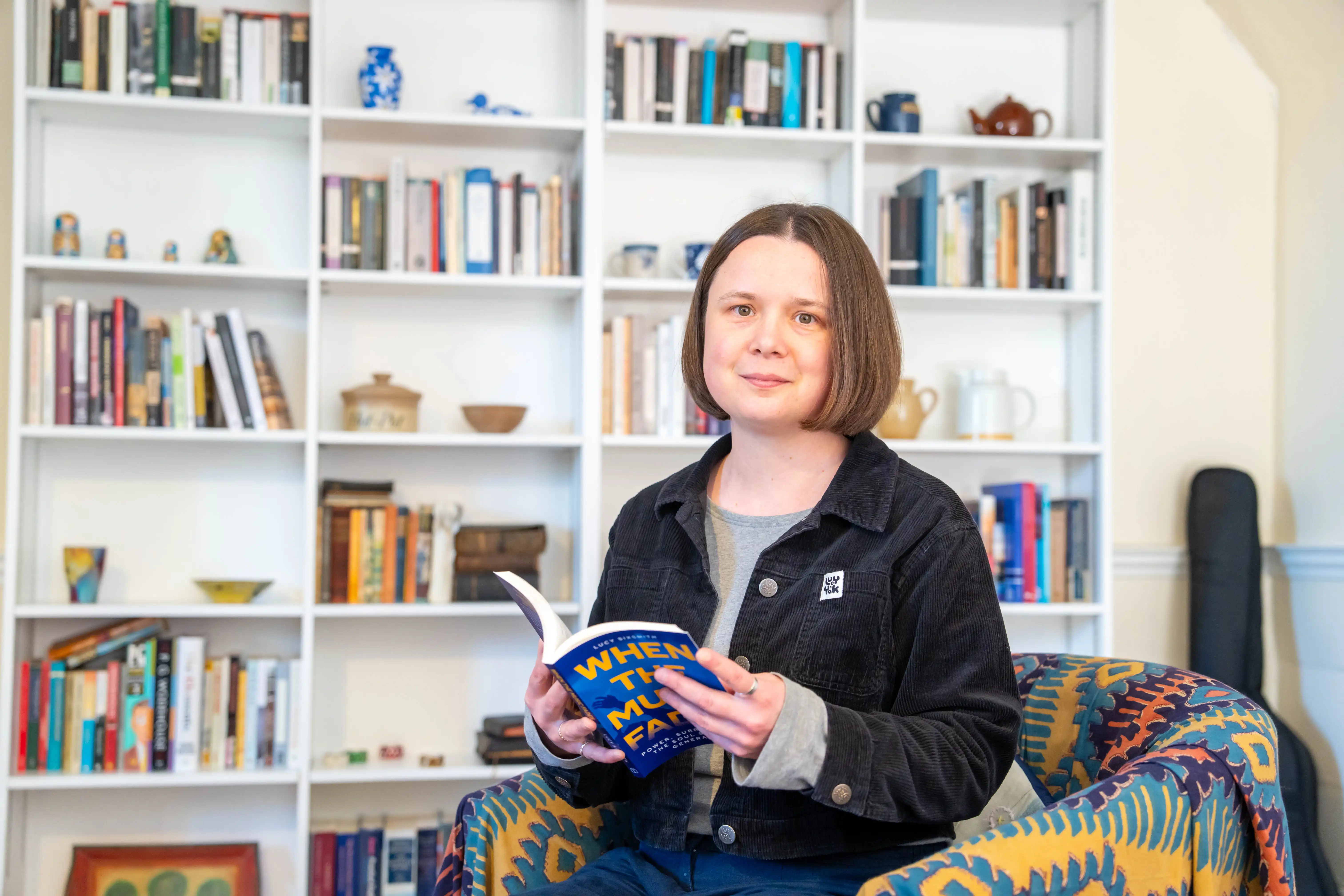
  • Dr Lucy Sixsmith, a Research Fellow in English, raises ethical questions about evangelical youth culture church practices in her new book, When the music fades: Power, surrender and the Soul Survivor generation
  • Dr Pratyush Ghosh, a physicist whose research challenges decades of design rules in solar energy research. He is helping fellow scientists develop more efficient ways of harvesting sunlight and converting it to electricity
  • Dr Helena Gellersen, a cognitive neuroscientist studying how healthy aging and the earliest stages of Alzheimer’s disease alter brain function and memory processes. Her work is crucial to improving current memory tests for screening and monitoring potential treatment effects

Learn more about the work of our Research Fellows

News
Research

Related articles

Students from 142 schools and colleges to join St John’s

The College received 1,501 applications in the 2026 round, with A-level entrants averaging more than three A*s each, International Baccalaureate entrants averaging 44 overall, and 73.4 per cent of UK entrants coming from the state sector

News
A photo taken by NASA's Hubble Space Telescope of a supermassive black hole in the middle of the Centaurus A galaxy, with two jets of plasma moving near the speed of light
Spacetime expert to give lecture in memory of young physicist

The 2026 Andrew Chamblin Memorial Lecture will be given in Cambridge by US theoretical physicist Professor Gary Horowitz on 16 October 2026, following a commemorative concert in Oxford on 29 September

News
Professor John Iliffe in the Cloisters at St Johns College, Cambridge
The academic who transformed understanding of African history

Professor John Iliffe, Fellow of St John’s College, is remembered for his influential books, inspirational teaching, and ‘sense of humanity’, following his death at the age of 87

News
Colourful abstract macro of quantum computing qubit cell
The secret to quantum computing may lie in negativity

St John’s researcher uses 1945 mathematical tool developed at the College by Nobel Prize winner Paul Dirac to separate the ‘useful magic states’ that fuel quantum computing from the ‘useless’

News
Research