Achieving net zero emissions is a scientific necessity for stopping global warming, not a political choice, a renowned geochemist has warned.
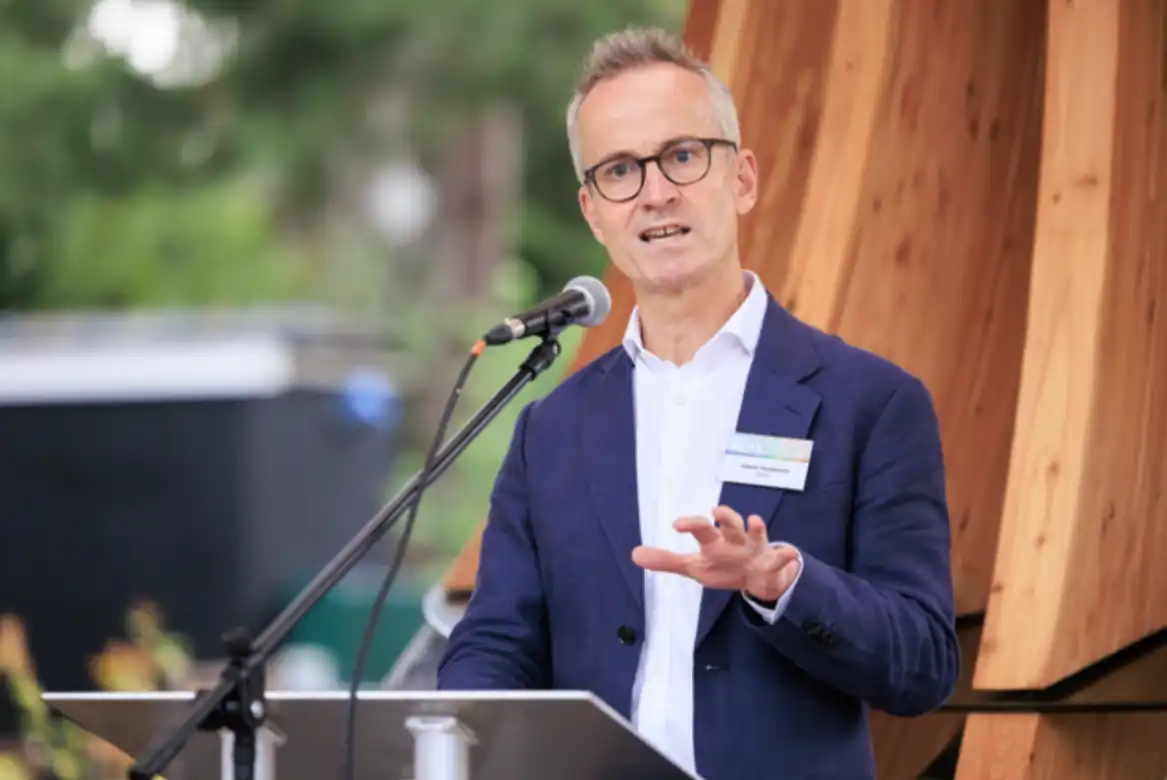
Speaking at the St John’s College Climate Crisis Lecture 2026, Professor Gideon Henderson CBE FRS said unless greenhouse gas emissions are brought into balance with carbon removal, temperatures will continue to rise.
“Net zero is sometimes treated as an ambition or a slogan,” he said. “But it is simply scientific fact. If we want the climate to stop warming, we have to get to net zero as quickly as possible.”
The lecture given by Professor Henderson, Professor of Earth Sciences at the University of Oxford, and an Honorary Fellow of St John’s College, Cambridge, is titled Carbon dioxide removal: Is the science and policy keeping up with the market?
Known as one of the UK’s most senior scientific voices on climate and the environment, a video of his lecture, held at St John’s Old Divinity School on Tuesday 2 March 2026, is now available to watch online.
Professor Henderson told the audience reaching net zero will require both a rapid move away from fossil fuels and the large-scale use of carbon dioxide removal technologies.
Only then, he said, will net zero emissions be achieved by2050 – the target set by the UK government, European Union, and other major international bodies. Net zero refers to a state in which greenhouse gases going into the atmosphere are balanced by removal out of it.
Professor Henderson, who studied for his PhD at St John’s, described this as ‘an enormous engineering challenge’, requiring a mix of approaches including direct air capture, bioenergy with carbon capture and storage, biochar and enhanced rock weathering. He also pointed to emerging methods such as increasing ocean alkalinity to boost the sea’s capacity to absorb carbon.
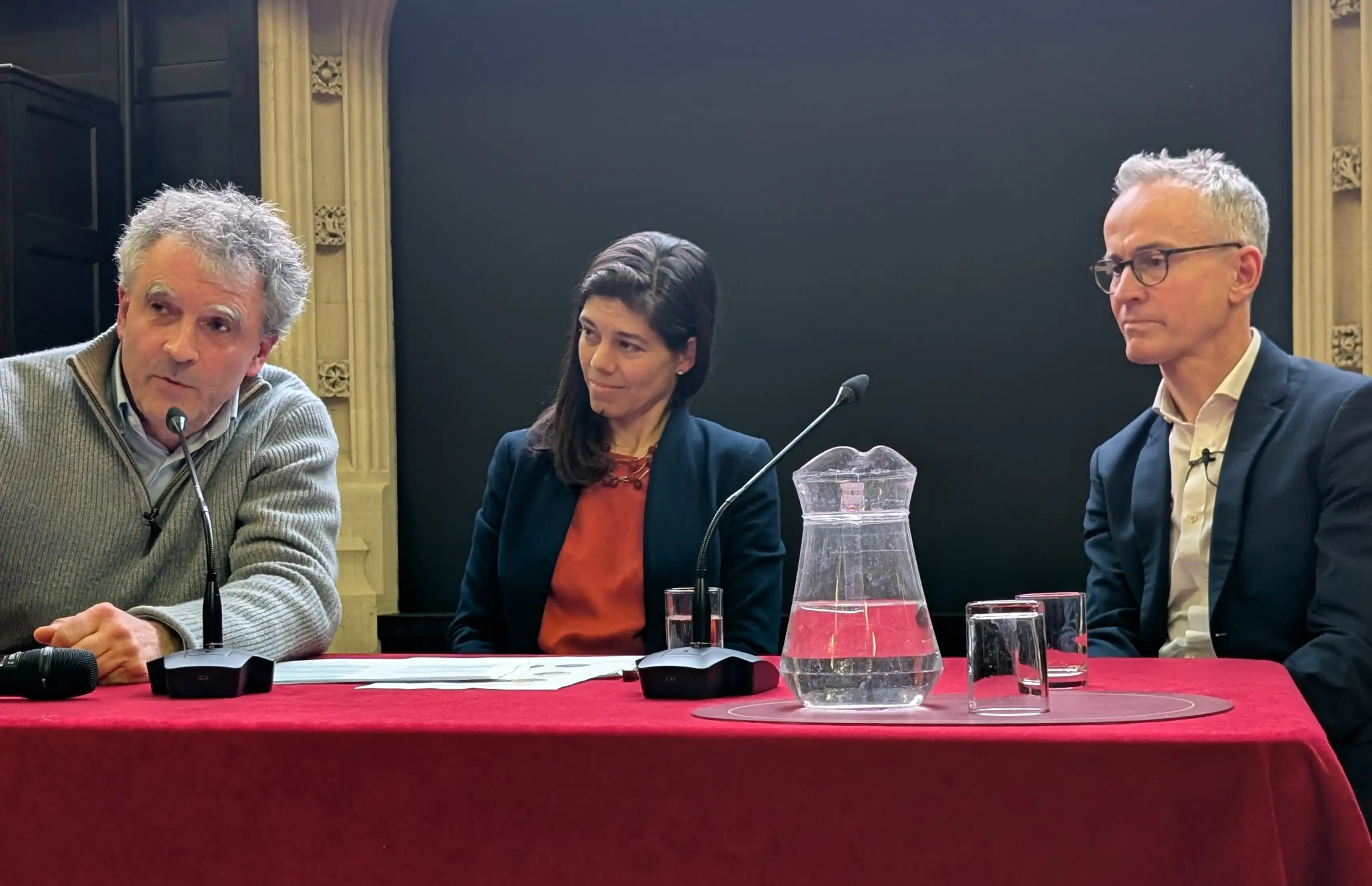
St John’s Fellows Professor Laura Díaz Anadón, Professor of Climate Change Policy, and Professor Andy Woods, Head of the University’s Institute of Energy and Environmental Flows, further stressed the scale of the task ahead – and the need for clear policies, independent certification, significant investment and collective action to scale up technologies to limit global warming.
“We need to build the equivalent of about 2,000 Wembley Stadiums to put all the C02 in we need to capture every year until 2100,” said Professor Woods.
Heather Hancock, Master of St John’s College, highlighted the College’s ongoing commitment to decarbonisation and increasing biodiversity.
These include sustainable developments such as Hinsley Lane, an award-winning Passivhaus student neighbourhood near the main College site, and ongoing ambitious efforts to cut energy use and emissions.
“The biggest contribution St John’s is making to a viable future for our planet is fostering in our Fellowship a research community which embraces the most extraordinary breadth and depth of exploration of climate and biodiversity crisis.”
The lecture series is organised by St John’s Climate Crisis Committee and reflects the College’s commitment to fostering informed debate on the scientific, economic and policy dimensions of climate change, and to bring research and ideas aimed at addressing the crisis to a wider audience.