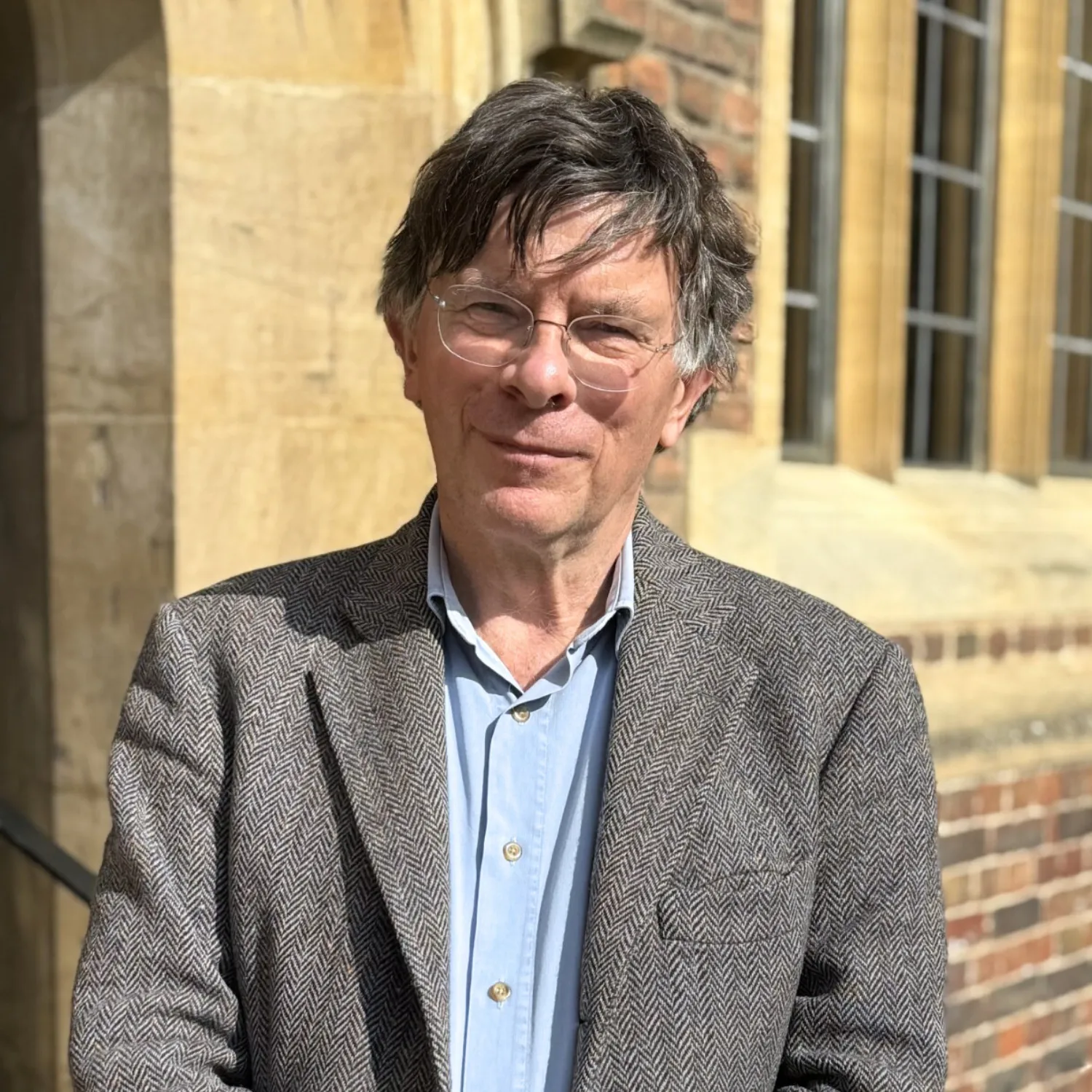
Human uniqueness, science and religion will be brought together during a public lecture being given by the award-winning visionary paleobiologist Professor Simon Conway Morris at St John’s College.
Professor Conway Morris, Emeritus Professor of Evolutionary Paleobiology at the University of Cambridge and Fellow of St John’s College, won the prestigious £1.04 million Templeton Prize earlier this year for his groundbreaking work in the field of evolutionary biology.
On Wednesday 4 November, 9pm, he will present The Chapel Lecture at St John’s, titled If humans are unique... ?. The Chapel Lecture is interdisciplinary and given by prominent thinkers whose work spans academic boundaries and addresses questions about human meaning, spirituality and faith.
The Rev’d Dr Victoria Johnson, Dean of Chapel at St John’s, said that Professor Conway Morris’s ‘expansive ideas open the door for us to consider fundamental questions about humankind’s place and purpose in the universe’.
“As well as being a place for prayer and worship, the Chapel is also a place to reflect on the big questions facing humanity, the meaning of life, the universe and everything, and exploring how we can work together for the common good of all people.”
His research raises tantalising questions: are humans fundamentally different from animals? What is the essence of organic life? Is life possible elsewhere in the universe?
Professor Conway Morris is best known for his work on convergence, the recurrence of similar biological features across vastly different evolutionary lineages.
His interests also extend into astrobiology and a concept known as Fermi’s Paradox – which highlights the contradiction between the high probability of extraterrestrial life and the lack of evidence or contact with other civilizations.
His research raises tantalising questions: are humans fundamentally different from animals? What is the essence of organic life? Is life possible elsewhere in the universe? Can Large Language Models – AI systems capable of understanding and generating human language – rival human capacities, or does our ability to imagine set humans apart in ways that can never be fully replicated?
In April 2026 Professor Conway Morris was awarded the Templeton Prize for his field-defining work.
The Chapel Lecture is part of the College’s Common Good programme, which provides a space to reflect on how we, as human beings in all our diversity, work, live and thrive together in the 21st century. Shaped by keynote lectures, discussions, networking events, workshops, visits and volunteering, it explores questions that prepare students for life beyond their degree.
The lecture will take place in the Chapel of St John’s College on Wednesday 4 November at 9pm. It is free and open to all, booking is not required.