The rapid global push to remove carbon dioxide from the atmosphere – and the question of whether it can be done safely, credibly and at scale – will be the focus of the next Climate Crisis Lecture at St John’s College.
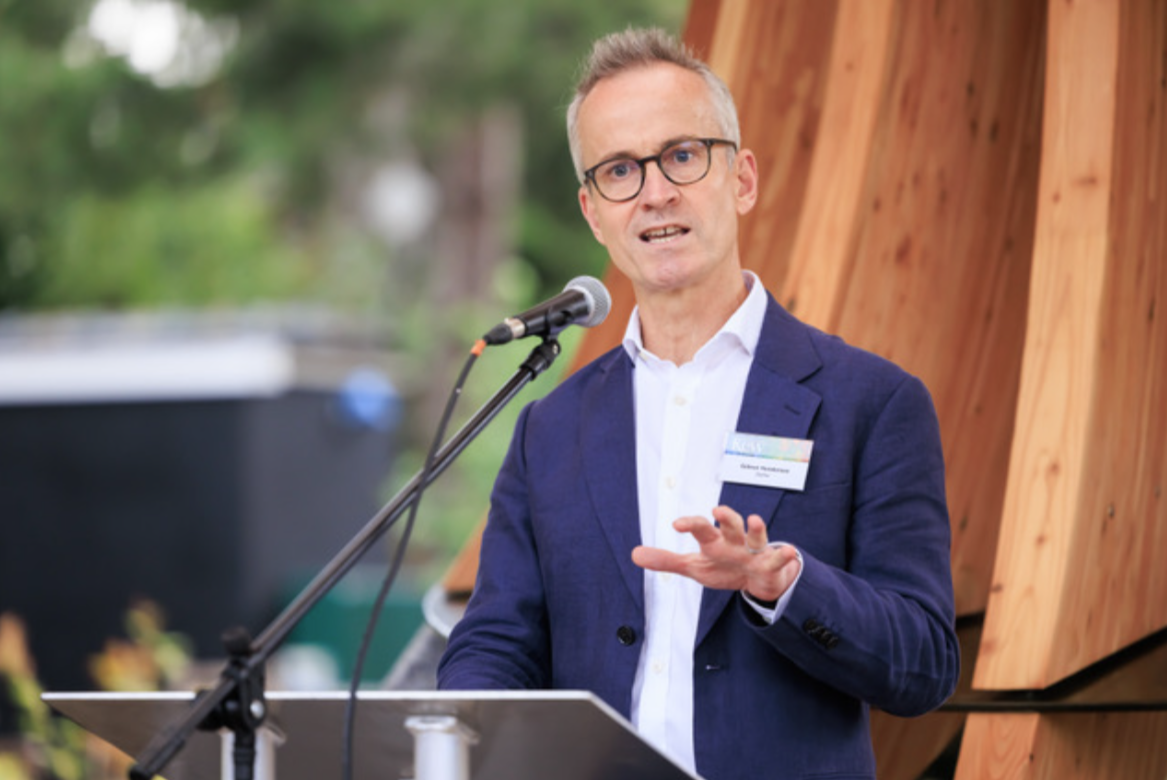
Professor Gideon Henderson CBE FRS, an Honorary Fellow of St John’s and one of the UK’s most senior scientific voices on climate and the environment, will deliver the free lecture, Carbon Dioxide Removal: Is the Science and Policy Keeping Up with the Market?
The lecture take place at 5pm on Tuesday 3 March 2026 in the Main Lecture Theatre, Old Divinity School.
It builds on the success of the inaugural lecture in 2024,when Professor Sir Partha Dasgupta, author of On Natural Capital (2025), addressed a packed audience on the need to rethink how prosperity is measured in the face of ecological decline.
Professor Henderson is Professor of Earth Sciences at the University of Oxford, a geochemist whose research focuses on the carbon cycle, oceans and past climate change.
As Chief Scientific Advisor and Director General for Science Analysis at Defra (Department for Environment, Food and Rural Affairs), 2019-2025, he has had leadership roles in UK environmental policy and experience at the interface of research, regulation and public decision-making.
Professor Henderson said: “Since the Paris Agreement, it has been clear that cutting emissions alone will not be enough to keep warming below 2°C – we will also need large-scale removal of carbon dioxide from the atmosphere. Carbon dioxide removal (CDR) has moved rapidly from theory to commercial activity, with more than 200 companies involved and billions already invested.
“As countries and markets move ahead, we need regulation that supports innovation while protecting the environment”
“But most approaches remain novel and largely untested. Questions remain over whether removals are permanent, additional, and truly deliver the climate benefit claimed. Measurement and verification are major challenges, and the wider environmental impacts are still under-examined.
“CDR presents a real dilemma: it may be essential to avoid dangerous climate change, yet the precautionary principle demands care. As countries and markets move ahead, we need regulation that supports innovation while protecting the environment.”
The lecture will ask what must be done, as demand for CDR credits grows, to ensure they have real climate value and do not cause unintended environmental harm.
The lecture will be followed by a discussion featuring St John’s Fellows Professor Laura Diaz Anadon, Professor of Climate Change Policy, and Professor Andy Woods, Head of the University’s Institute for Energy and Environmental Flows. Professor Woods’ research includes work on geological carbon storage and subsurface energy systems, while Professor Diaz Anadon’s work focuses on climate policy, innovation and governance.
The lecture begins at 5pm, following short presentations from 4.15pm by last year’s three Mace-Arnold Studentship award-holders, who undertook undergraduate summer research projects in 2025 related to the climate crisis.
The Climate Crisis Lecture series is organised by the college’s Climate Crisis Committee and reflects St John’s College’s commitment to fostering informed debate on the scientific, economic and policy dimensions of climate change, and to showcasing research and ideas aimed at addressing the climate crisis.