The inaugural cohort of 100 brings together the country’s strongest mathematicians across academia, education, business, industry and government to help tackle major national and global challenges.
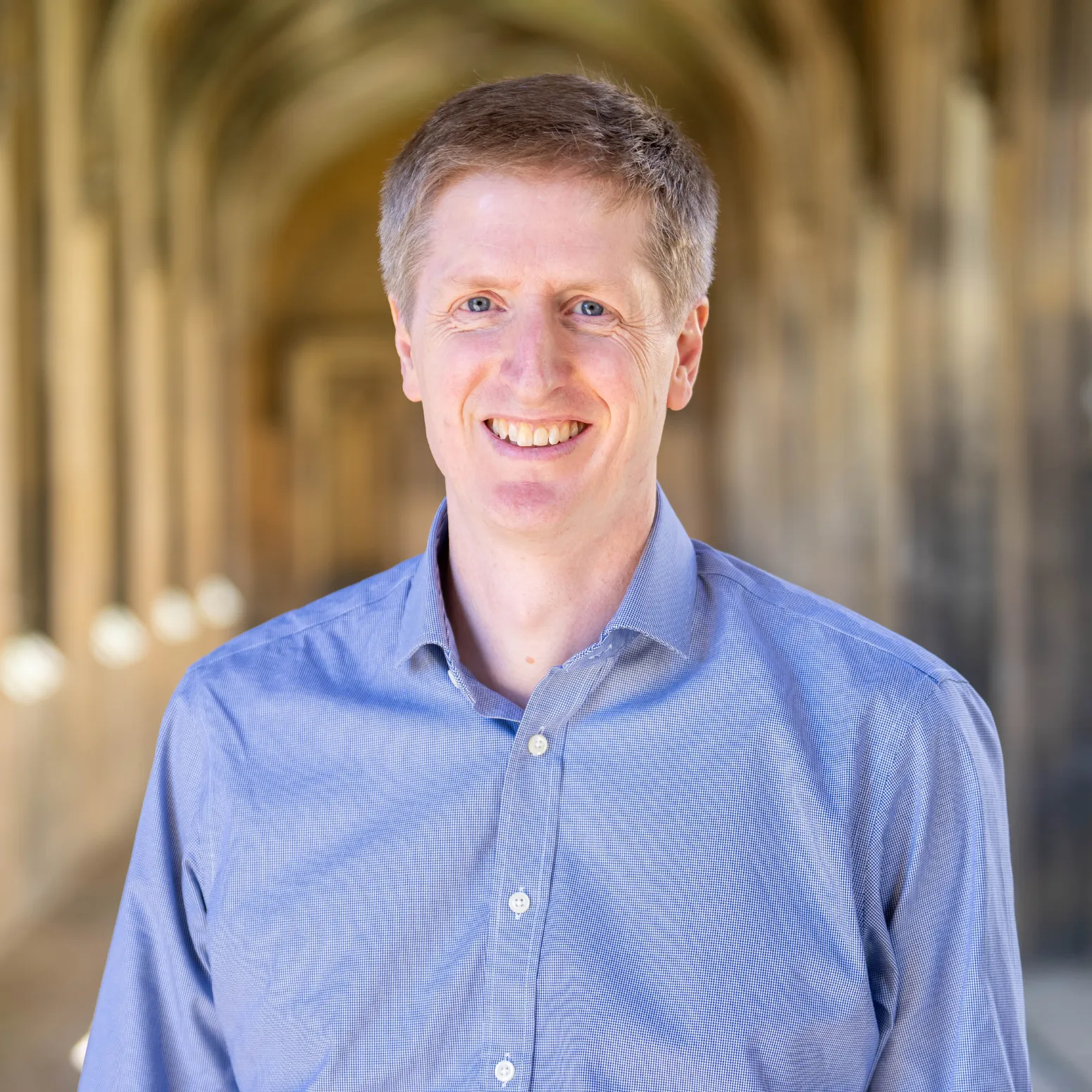
Professor Samworth, College Lecturer in Pure Mathematics, Professor of Statistical Science and Director of the Statistical Laboratory at the University of Cambridge, has received multiple honours including the Royal Statistical Society’s Guy Medal in Silver and the David Cox Medal for Statistics – both awarded in 2025 for his contributions to statistical theory and methodology.
The new Fellows also include Professor Sir David Spiegelhalter FRS OBE, the noted authority on risk and public communication ofstatistics, alongside other distinguished Cambridge mathematicians such as Professor Carola-Bibiane Schönlieb.
Professor Samworth said: “The Academy for the Mathematical Sciences is a new body designed to provide an influential voice for the mathematical sciences in the UK. I'm delighted to be elected as one of the inaugural fellows, and look forward to contributing to its mission.”
Among the Fellowship are winners of the Fields Medal, business leaders, distinguished teachers and academics, science communicators, and pioneers of computing and machine learning. They will collaborate on tackling challenges, including pandemic preparedness, economic transformation, national security, and safe AI.
“Mathematics sits at the heart of the UK’s scientific and technological strength and is essential to the development of the industries of the future, in exciting fields like AI and quantum”
Much like Fellows of the other National Academies – the Royal Society, Royal Academy of Engineering, British Academy and the Academy of Medical Sciences – the Fellows of the Academy for the Mathematical Sciences have been recognised as leaders in their fields, through fundamental discoveries, exceptional work in education, or driving the application of mathematics across society.
Lord Vallance KCB FRS FMedSci FRCP HonFREng, Minister for Science, Innovation, Research and Nuclear in the Department for Science, Innovation and Technology (DSIT) and the Department for Energy Security and NetZero (DESNZ), said: “Mathematics sits at the heart of the UK’s scientific and technological strength and is essential to the development of the industries of the future, in exciting fields like AI and quantum.
“The Academy for the Mathematical Sciences’ inaugural Fellows represent the very best of this national capability, and I commend the Academy for bringing them together. Their expertise strengthens our security, boosts productivity and supports high‑quality jobs across the country, so it is only right that they are celebrated.”
Professor Samworth has made numerous contributions toseveral areas of statistics, including shape-constrained modelling, high dimensional statistics, change-point analysis and nonparametric classification.
Last year, he was awarded the Royal Statistical Society’s prestigious Guy Medal in Silver a day after winning the David Cox Medal for Statistics.
Guy Medals are named after the distinguished British medical statistician, William Augustus Guy, and date back to 1892. The silver medal is awarded annually to society Fellows who have communicated papers of special merit to the community or published them in its journals, along with other contributions to statistics.
The international David Cox Medal for Statistics commemorates the work of the late St John’s statistician, Honorary Fellow and alumnus Sir David Cox.