The University of Cambridge’s major strategic partnership with the quantum technology company IonQ will support the creation of the IonQ Quantum Innovation Centre to be based at the new Ray Dolby Centre – the home of the Cavendish Laboratory.
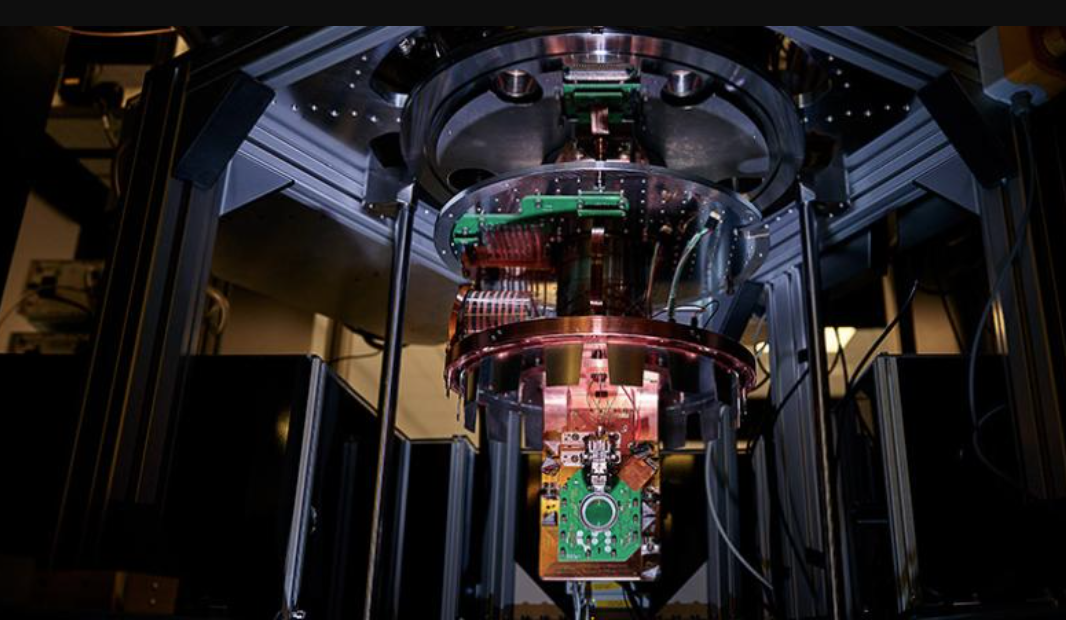
The centre will house a state-of-the-art IonQ 256-qubit quantum computer, which will be the most powerful quantum computer in the UK.
“Cambridge is already a critical player in the UK’s national quantum technology programme, and this partnership will supercharge that role,” said Professor Mete Atatüre, Head of the Cavendish Laboratory, Fellow of St John’s, College Lecturer in Physics, and Director of Studies for Physics and Astrophysics, and for Mathematics for Natural Sciences.
“This is a true partnership, with long-term investment, shared research and co-development in all areas of quantum technology, bringing together physics, engineering, medicine, computer science, policy and more.”
The collaboration is the University’s largest-ever corporate research partnership. As part of it, Innovate UK, the UK’s innovation agency and part of UK Research and Innovation (UKRI), will provide access and computing time for UKRI’s National Quantum Computing Centre over three years.
This support will enable researchers and early-stage companies from across the UK to make use of the enormous power of the first commercial-scale quantum computer at a UK university.
The new IonQ Quantum Innovation Centre will host a research portfolio across quantum computing, quantum networks, quantum sensing, and quantum security. The partnership will also support new academic positions, postdoctoral fellows and PhD students at the University.

Quantum computers harness quantum phenomena to achieve a level of performance which is otherwise unattainable, based on science which cannot be explained by classical physics.
The shift from lab-scale quantum computers to truly application-focused systems could greatly accelerate the pace of discovery in a number of areas that will improve lives, such as ultra-secure communication networks, super-powerful computers, record-breaking quantum sensors and accelerated drug discovery.
Cambridge is home to one of the largest and most successful communities of quantum scientists and technologists in the world, working across the University. The Cavendish Laboratory has long been at the heart of this research community, and this partnership is the next chapter in that long legacy.
“We’re proud that Cambridge is at the heart of the UK’s next computing revolution,” said Professor Deborah Prentice, Vice-Chancellor of the University of Cambridge.
“This new and ambitious partnership is the first of its kind for a UK university. It’s not just a new facility for Cambridge – it’s one for the whole of the UK, and it will develop not only exciting new technologies but also the UK’s next generation of leaders in quantum science.”
Unlike traditional models of siloed research stuck within disciplines, the Cambridge-IonQ partnership will bring researchers across multiple disciplines, industry partners, end users and policy experts together from the outset. This joined-up approach will ensure that scientific and technological advances are aligned with commercial and societal needs and are rapidly translated into real-world solutions.
The quantum computer will be managed by Cambridge Enterprise, the University’s innovation arm. Researchers working in quantum science and technology from across the University will be able to make use of the new quantum computer once it is fully operational.
Full story on the University of Cambridge website