School Visits to the Library
 |
The Library welcomes educational visits from schools, colleges, academies and other organisations. We have worked with local schools to develop sessions delivered in the historical setting of our Old Library, based on our wide-ranging special collections. These sessions are very flexible and can be tailored to suit the needs of individual classes. Some examples of previous educational activities in the Library are below. For more information or to arrange a visit please contact Special Collections. Email: special.collections@joh.cam.ac.uk, Tel: 01223 339393. A Risk Assessment for visits to the Library may be found HERE. |
Primary Schools |
|
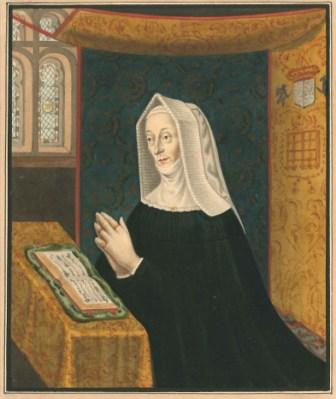 |
The Tudors St John's College was founded in 1511 by Lady Margaret Beaufort, mother of Henry VII, so it is a good place to begin a project on the Tudors. Tudor material in the Old Library includes a copy of the Great Bible, charts of the progress of the Spanish Armada, and even an eyewitness account of the execution of Mary Queen of Scots. |
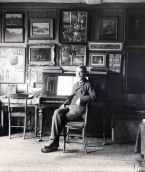 |
A Victorian Writer's World Who was Samuel Butler? In this interactive workshop children investigate a range of historical artefacts to help them build up a picture of a Victorian writer’s world. Using the exhibits as ‘clues’ they deduce what kind of person Butler was and what he achieved, and view original evidence of the events and developments that occurred during his lifetime. They then work together to place images relating to the events and artefacts on a jumbo timeline – creating a visual display of some of the highlights of the nineteenth century. For more information about this session and other educational activities linked to the Samuel Butler Project, click here. |
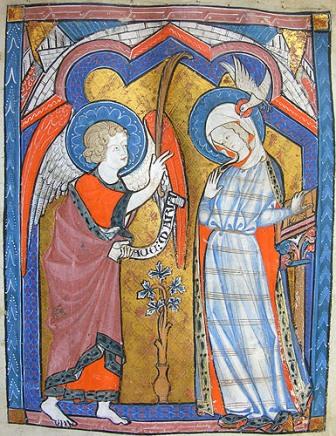 |
Special Books and Sacred Texts A look at rare and unusual volumes of sacred texts from a variety of faiths, including Christianity, Judaism and Islam, to explore the diversity of world beliefs and what makes certain texts special to different people and cultures. Our collections include a 10th-century Irish Psalter, Henry VIII's Great Bible and much more. |
Secondary Schools |
|
|
English Language Change 1500-Today Caxton's earliest printed books, Samuel Johnson's dictionary, Robinson Crusoe, Tristram Shandy, Wordsworth's Lyrical Ballads, William Barnes' Dorset dialect poetry, Philip Larkin, letters, diaries, one penny chapbooks... a walk through over three hundred years of the English language through the literature that shaped, transformed and recorded it. |
 |
|
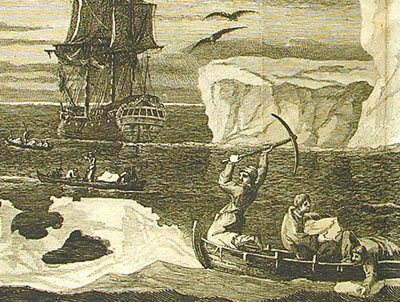
Curious People: A History of Exploration Discover how Europeans explored the rest of the world through illustrations and first hand accounts in books, maps and papers. Examples of the Library's range of material on this subject can be accessed through the Curious People online resource. This topic also allows scope to learn about the science of the polar regions and environmental issues. |
 |
|
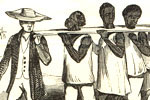
The Slave Trade and Abolition William Wilberforce and Thomas Clarkson, partners in the campaign to abolish the Transatlantic Slave Trade, both studied at St John's College. Students have the opportunity to work with primary sources including Clarkson's diaries recording his evidence-gathering trips to English ports where he witnessed the effects of the slave trade. 18th-century pamphlets from the special collections reveal all sides of the debate that raged around the campaign for abolition. |
 |
|
Curator for an Hour Find out what it means to 'interpret history', first-hand. Faced with 30 unlabelled artefacts from the wonderfully varied Samuel Butler collection, students take on the role of curator - observing, analysing and comparing items, then identifying a theme or creating a narrative that could link these together to form an exhibition. For more information about this session and other educational activities linked to the Samuel Butler Project, click here. |
 |