“A state-of-the-art facility designed to push the boundaries of what is possible.”
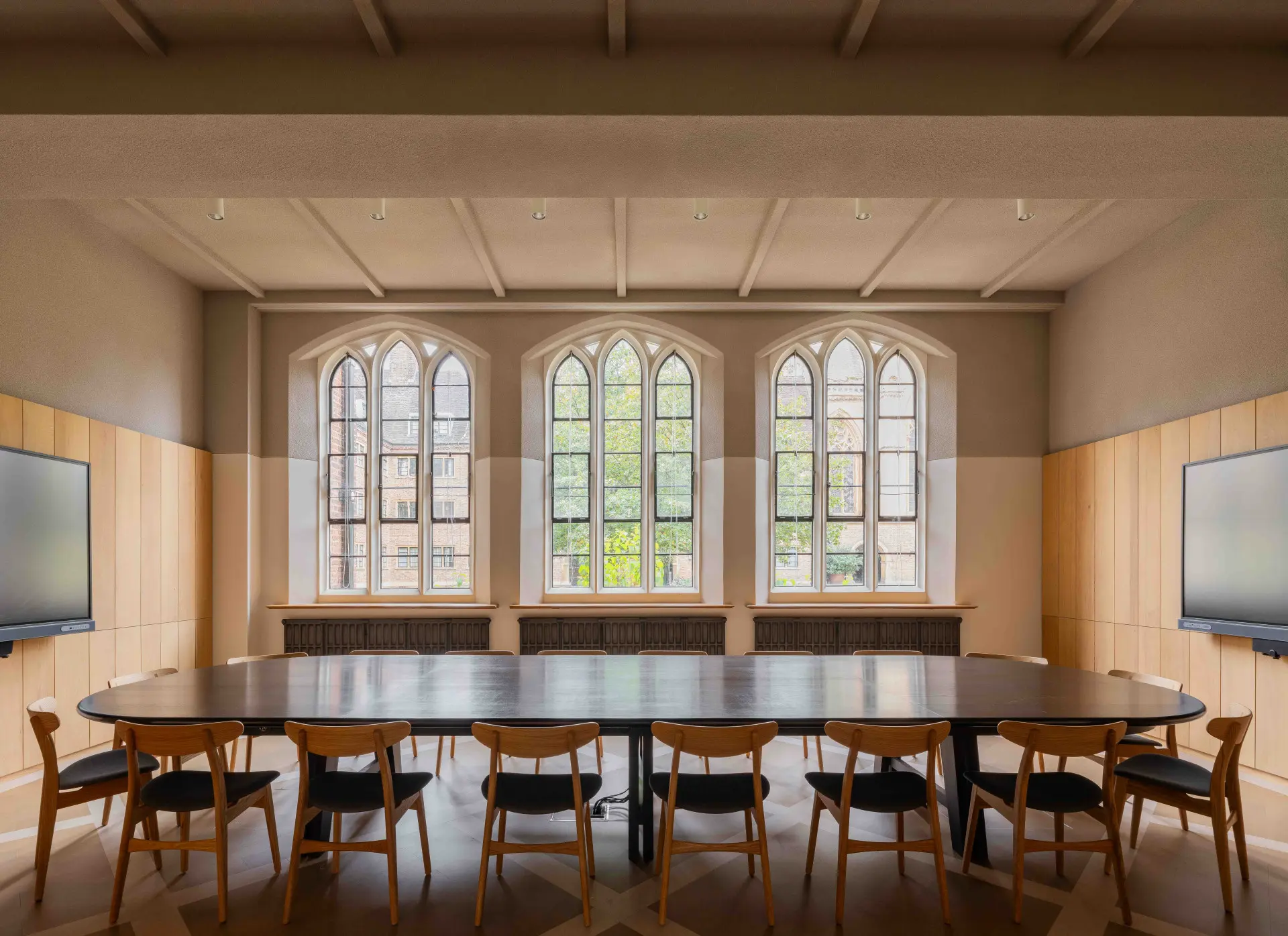
That’s how Professor Mete Atatüre, Head of the Cavendish Laboratory and a Fellow of St John’s, has described The Ray Dolby Centre – the new home of Cambridge Cavendish Laboratory and a major asset for the University, the city and the nation.
Professor Atatüre, who is College Lecturer and Director of Studies for Physics and Astrophysics and for Mathematics for Natural Sciences, said: “Our new home presents unprecedented possibilities enabling our researchers to tackle some of the greatest scientific challenges of our time, from unlocking the secrets of dark matter and origins of life in the universe, to addressing the energy crisis for a sustainable society and translating quantum science to technologies of tomorrow.”
The Cavendish, which has produced 31 Nobel Prize-winners, is one of the world’s most influential science laboratories. In the 150 years since its founding, its scientists have fundamentally changed our understanding of the physical world. It is where the electron, the neutron and the structure of DNA were discovered, and where new frontiers in physics research are being explored today.
.webp)
The new facility was officially opened by Cambridge alumna and philanthropist Dagmar Dolby, Vice-Chancellor Professor Deborah Prentice, Professor Atatüre, and Lord Spencer Livermore, Financial Secretary to the Treasury and Minister for Growth, on Friday 9 May.
The centre has been named in recognition of a generous £85 million donation from the estate of Cambridge alumnus and sound pioneer Ray Dolby. Another £75 million support came from the UK government through the Engineering and Physical Sciences Research Council (EPSRC).