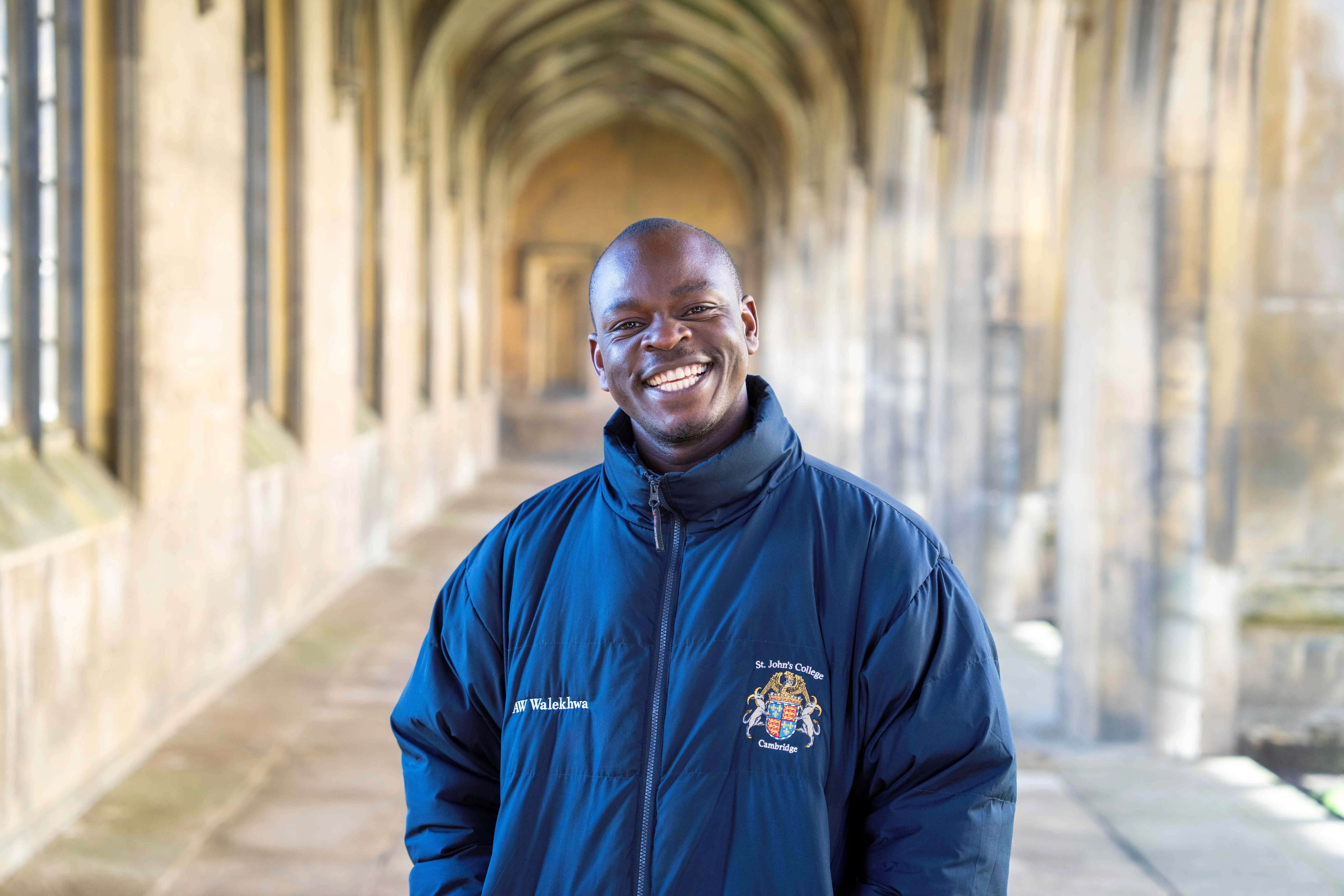
Abel Wilson Walekhwa’s life has taken him from grazing his neighbours’ cows as a nine-year-old to earn money for school supplies, to investigating livestock disease at the University of Cambridge.
Now in his fourth year at St John’s, he spotted the power of his personal story to inspire others facing hardship and educational barriers to follow in his footsteps.
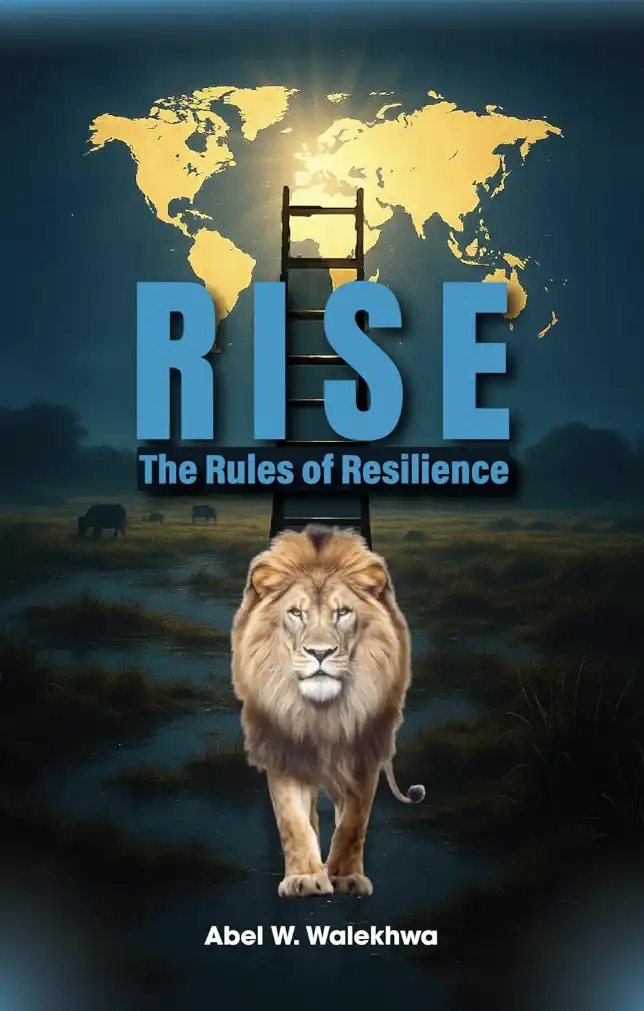
His new book Rise: Rules for Resilience, blends his own experiences battling poverty and family setbacks with a series of 15 ‘rules’ distilled from his own success, infused with the wisdom of African proverbs and biblical inspiration.
Studying for a doctorate in infectious disease modelling, with a specific focus on the early detection and control of Rift Valley fever (a viral disease affecting both humans and animals) in Uganda, Abel has a different perspective from many Cambridge students on the facilities often taken for granted at the University.
“There is so much to value here, but I am always particularly aware of the importance of stable, high-speed internet. It’s really magical. In Cambridge, I can access any paper instantly: many colleagues I’m working with in west and east Africa just don’t have the processing speed to download those same studies.”
Abel’s own childhood was marked by obstacles to learning. Born in 1989 and growing up in the small town of Butaleja, in eastern Uganda, he lived with his parents and seven siblings in a one-room grass-roofed hut without electricity, sharing a single candle each evening.
When classmates bullied him because of his father’s alcoholism, he was determined to focus harder than ever on his studies, milking cows at aged seven and by nine grazing neighbours’ herds for pennies to buy pens and books. Whenever he could, he studied, sheltering under mango trees to read notes waterproofed in plastic bags against sudden rains.
“Speaking from my own experience, I argue that the power of a mindset shifts victimhood to victory”
The effort paid off: Abel soon climbed academically to the top of his school, where classes of 200 pupils were taught sitting on dirt floors. Training his own mindset to ‘see setbacks as setups’, he sold telephone cards and taught in schools to propel himself through diplomas, a bachelor’s degree at Makerere University and a master’s at Mbarara University of Science and Technology – both in his home country. A difficult period followed as he applied for funding and places at institutions that would further his ambitions, before he finally arrived at St John’s in 2022.
Based in the Disease Dynamics Unit of the Department of Veterinary Medicine at Cambridge, Abel builds mathematical models to permit early detection of disease outbreaks, combining his studies with a role in the Science Secretariat of the President’s Office in Uganda. His work there helps the government guide research investment into vaccines and other initiatives and ensure timely intervention to save lives and money.
His epidemiology expertise has also seen him appointed to the United Nations’ One Health High-Level Expert Panel, which advises at four UN agencies, including the World Health Organisation, to improve our understanding of how diseases with the potential to trigger pandemics emerge and spread.
But despite his academic and professional success, Abel’s adjustment to Cambridge was not always smooth – a challenge that ultimately led to his new book.
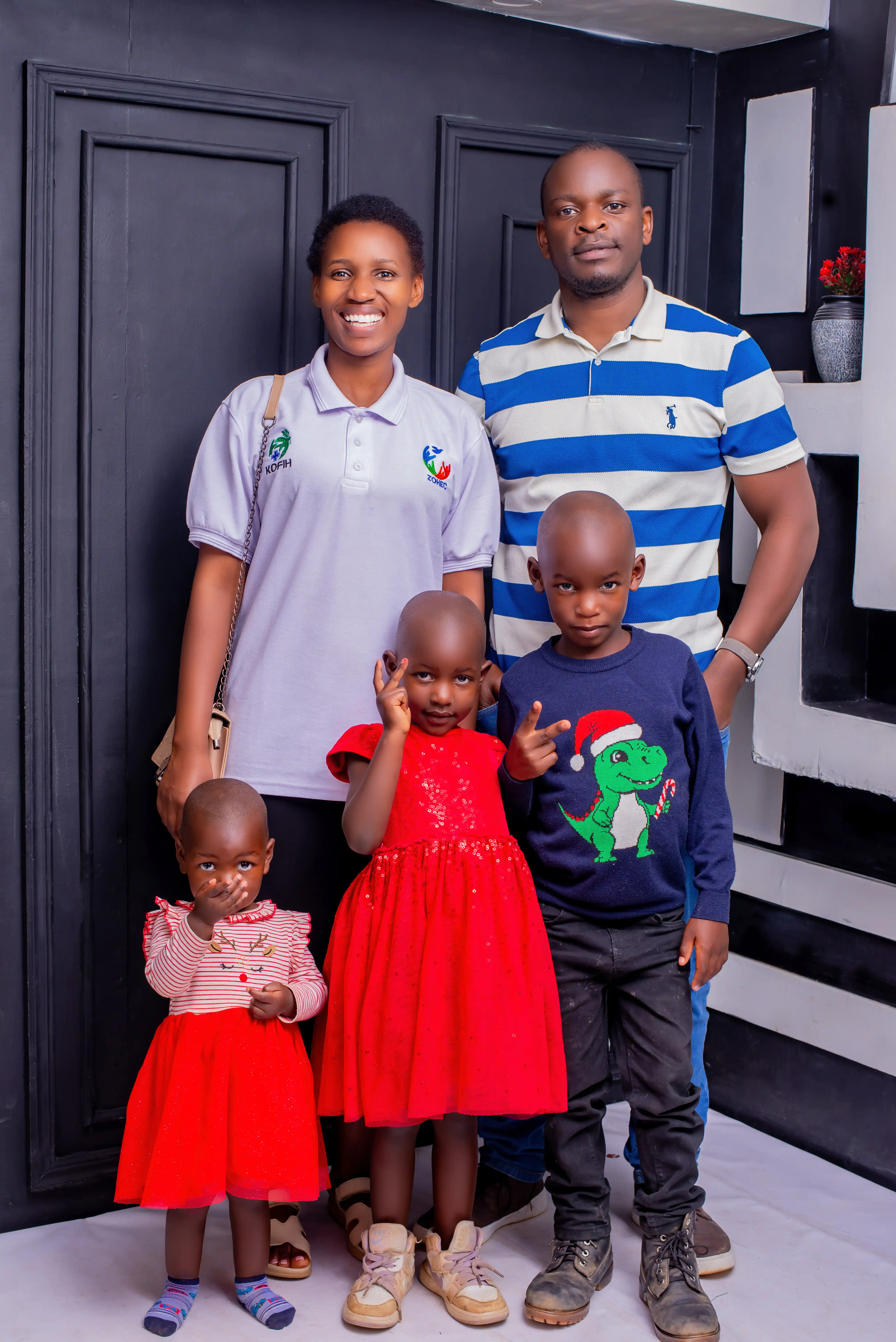
“St John’s is an amazing place but coming to England was very tough. I come from a country where the temperature is 25 degrees all year round so the cold was hard. I also missed my wife and four children who are back at home in Uganda.”
Abel sought pastoral support from his College Tutor, who encouraged him to keep busy and play to his strengths. He took the advice and came up with a coaching programme to inspire would-be students in Africa to apply to university. He developed his own charity, the African Centre for Career Mentorship (ACCM), delivering free YouTube webinars on subjects such as interview technique and preparing scholarship applications.
“I was very happy that the centre helped me connect with people from Africa instead of feeling isolated, and also to create resources that people are using.”
The popularity of the webinars and his success in mentoring students to secure scholarships in turn prompted Abel to collect his experiences – both positive and challenging – into his book Rise, which intersperses chapters chronicling his life story with rules such as ‘Embrace the Mud: Hardship Builds Foundations’ (echoing a proverb in Lugwere, a language spoken in his home region).
“The main thing is to keep pressing on: to fail many times but to keep going”
He says: “These aren’t abstract theories; they’re battle-tested. Speaking from my own experience, I argue that the power of a mindset shifts victimhood to victory; community uplifts, as my mentors and siblings did for me; and persistence pays.”
After submitting his PhD this academic year, Abel plans to return to Uganda to join his family and to develop a new diagnostic kit to screen farm animals for 10 diseases that can cause abortions in livestock.
If there is one key message he wants to convey to ambitious young African scholars, Abel says, it is, ‘Don’t give up’. “The main thing is to keep pressing on: to fail many times but to keep going. That is often more important than academic brilliance.”